Should I Use Colour Remover or Bleach To Lift Colour?
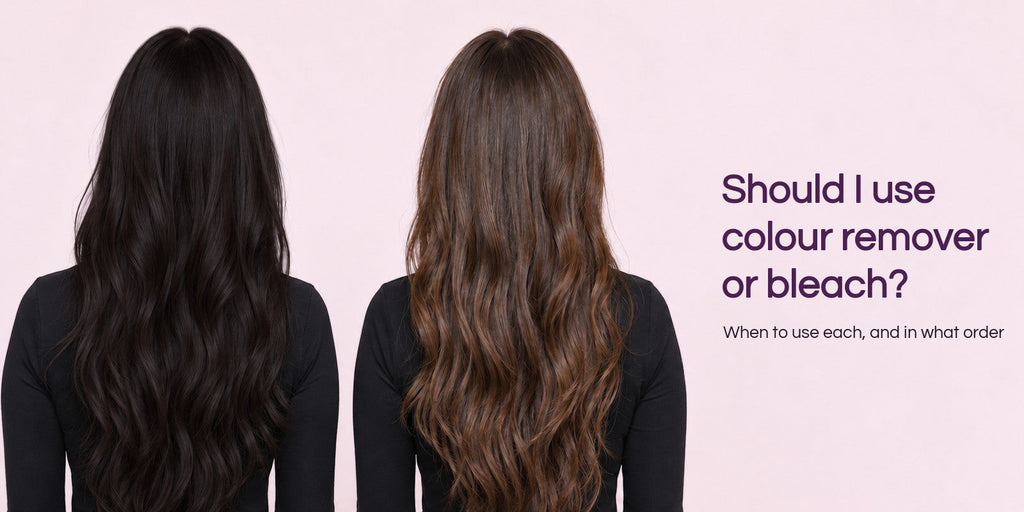
When a client wants their colour out, whether you reach for colour remover or bleach depends on what's already in their hair. The two do different jobs: a colour remover is aimed at the artificial colour, while bleach lightens the natural pigment too.
Here's the short answer. For permanent colour, use a colour remover first, then bleach only if the hair still needs more lift. For semi-permanent and fashion shades, start with clarifying washes. And yes, you can bleach after colour remover, once the remover is fully rinsed out, you've checked the hair's condition and you've strand tested the bleach.
For professional use. Always follow the manufacturer's instructions for your colour remover, lightener and developer.
To find out more about the bleach bath side, read How to bleach bath hair.
Should I use colour remover or bleach?
Choose by purpose: a remover to take permanent colour out, bleach to lift. Reducing colour removers break the colour molecules down (reduction) so they can be rinsed out. Bleach works by oxidation, and it lightens everything in the hair.

So start from what your client has on their hair.
- Permanent colour: a colour remover made for permanent colour first. Bleach comes after, only if needed.
- Semi-permanent and fashion shades: these are already-coloured dyes that sit mostly near the surface and fade with shampooing, typically over a few washes. Start with clarifying washes before you reach for a remover or bleach.
- Vivid or pastel shades on pre-lightened hair: some removers are made for exactly this job, taking vibrant and pastel colours out to bring the hair back to its pre-lightened blonde. Follow the pack's mixing instructions and the steps further down.
Colour remover or bleach first?
For permanent colour, standard salon practice is colour remover first, then bleach only if the hair still needs more lift. That way you aren't lightening the natural pigment before you know how much colour the remover has taken out.
Pro Tip: Let the remover result guide your next step. It shows you how much lift the hair still needs, and if the remover has done enough, you may not need bleach at all.
Can you bleach after colour remover?
Yes, once the remover is fully rinsed out. Check the hair's condition first and strand test the bleach on a small section, because hair is often more porous after removal and the next oxidative step can come out unpredictably.
With some reducing removers the colour can also creep back afterwards, and leftover product can let it return, so follow the pack's rinse time exactly. Packs also limit how many times you can repeat the process.
What's the difference between colour remover and bleach?
Permanent and demi-permanent colours are made inside the hair: small colourless precursors go in and react with the developer to form the colour. Once permanent colour has formed, it can't be completely removed. A reducing colour remover takes out some of it, so expect a partial result, not a clean slate.
Bleach (lightener) is an alkaline mix built around hydrogen peroxide. Powder lighteners usually add persulphate salts to boost and speed up the lift, and these systems generally run at about pH 9–11. It works inside the hair, oxidising and breaking down melanin, the hair's own pigment.
So bleach lightens both the artificial colour and the natural pigment. How much colour it takes out varies, so don't promise your client a result in advance. A bleach bath is lightener diluted with shampoo, so it's a weaker mix, but it is still bleach.
What will your client's hair look like afterwards?
Don't promise a return to their own shade. If their colour was permanent colour that lifted their base, their natural pigment has already been lightened. Once the artificial colour is out, expect the hair to be lighter and warmer than your client's natural shade, and plan to tone or recolour.
If you go on to bleach, it lifts dark hair through red, orange and yellow stages, so stopping part-way leaves warmth, especially on very dark bases.
How do you remove colour and bleach, step by step?
Whether you start with a remover or go straight to bleach, the order of the service stays the same.
- Skin test before the appointment. Do it as each product's pack directs, allowing the time the pack gives. If your client has reacted to a hair product before, ask them to speak to a pharmacist or GP before you go ahead.
- Put on suitable gloves. Wear them for every mix, including the strand test, and to apply and rinse.
- Strand test with a small separate mix. Mix a little of the product at the pack's ratio, apply it to a strand and check it as the pack directs, before you mix for the whole head.
- Mix the main bowl fresh. Mix it just before you apply it. Mix lightener in a well-ventilated area and avoid breathing in the powder.
- Develop within the pack's limits. Never go past the pack's maximum time, add no heat unless the pack allows it, and use a cap only if the pack says so.
- Rinse thoroughly. Lightener is designed for short contact followed by thorough rinsing. With a colour remover, follow the pack's rinse time exactly.
- Bleaching after the remover? Check the hair's condition first, then repeat steps 3 to 6 with the lightener: a strand test with a small separate mix, a fresh main bowl, the pack's limits and a thorough rinse.
Look after yourself at the bowl too. Dust from bleach powder is a common cause of breathing problems for hairdressers, so choose a dust-free powder where you can and keep the salon well ventilated.
Stop if there's any reaction after a skin or strand test, and never leave product on longer than the pack says. If a reaction starts, rinse the hair and scalp straight away and advise your client to seek medical advice.
Quick answers on colour remover and bleach
Is colour remover or bleach better?
Neither, because they do different jobs. Bleach is hard on hair: it weakens the bonds that give hair its strength, and the stronger the lift, the more the hair loses. So pick the product for the job in front of you, not for its reputation.
How long should you wait to bleach after colour remover?
There's no set waiting time. Follow the remover's own instructions, check the hair's condition and strand test before bleaching.
Will a colour remover take out pink, blue or purple?
Often not with a reducing remover. Most are made for permanent colour (the kind mixed with developer) and won't shift direct-dye fashion shades such as pinks, blues, greens and purples. Start with clarifying washes, or use a remover made for vivid shades on pre-lightened hair.
Best Products For Colour Removal and Lightening
A lightener for when the hair needs more lift, a clarifying shampoo to start with, and a remover made for vivid and pastel shades on pre-lightened hair.
 FarmaVita Omniplex Bleach Powder 500gA dust-free bleach powder with Plex technology and up to 7 levels of lift, mixed 1:2 with 20, 30 or 40 vol cream developer.
 Osmo Scalp Therapy Detoxify Shampoo 400mlA deep-cleansing shampoo designed to remove product build-up, dirt and excess oil.
 Crazy Color Back To Base Color RemoverDesigned to remove vibrant or pastel colours and return hair to its pre-lightened blonde state. Mix one sachet with 2 parts 10 vol developer.
Read next: How to bleach bath hair
Written by Amy-Louise Russell, Content Writer at Hairdressing Supplies.