What Is Clarifying Shampoo Used For?
If your hair feels heavy, coated or dull even after you've washed it, a clarifying shampoo may be what you're looking for. Clarifying shampoo (also called deep-cleaning shampoo) sits at the strongest-cleansing end of the shampoo range. It's designed to remove oil thoroughly and is mainly used to clear build-up from styling products such as hairspray, gel and mousse.
It's a once-in-a-while product rather than an everyday one. Here's what it does, when to reach for it, and when to leave it on the shelf.
To find out more about using clarifying shampoo in a bleach bath, read How to bleach bath hair.
What does clarifying shampoo do?
How strongly a shampoo cleans depends on which cleansing ingredients it uses, and how much. Clarifying shampoos usually rely on a strong cleansing ingredient, such as a lauryl sulphate, as the main detergent. You may also see it called an "anti-residue" shampoo.
That strength is the point, and also the reason to use it sparingly. Over-cleaned hair can feel rough and look dull and frizzy. So the aim is a reset when you need one, not a daily wash.
Formulas vary from brand to brand, so check the label and the directions on the one you buy.
What builds up on hair?
Styling products. The film from hairspray, gel and mousse can build up over about a week of use, leaving hair feeling harsh and looking dull, and everyday shampoos don't always shift it. Clarifying shampoos are designed to remove that build-up.
Silicones. Silicone from some shampoos can build up on hair over repeated washes. It depends on the rest of the formula, so not every silicone product behaves this way.
Conditioner, if you only co-wash. If you only wash with conditioner (co-wash), residue can build up.
Minerals from hard water. Calcium and magnesium in hard water can react with cleansers to form a dulling film ("scum"). Most shampoos contain ingredients called sequestering or chelating agents to stop this. Chemically treated hair also picks up more calcium and magnesium from tap water, and these minerals can leave it feeling stiffer.
When should you use clarifying shampoo, and how often?
About once a week, or every 10 washes or so, is a good guide, depending on how much product you use. Follow your product's directions too.
It's most useful if you use a lot of styling products, if you mostly co-wash, or if your hair has started to feel coated and look flat however often you wash it.

What does clarifying shampoo do to bleached hair?
Lightened and coloured hair needs a lighter touch. Shampoos for coloured or permed hair are usually made with milder cleansers, so a strong clarifying shampoo is best used sparingly on coloured or bleached hair. For very highlighted or bleached hair, use it less often or not at all.
If you do clarify, follow it with a rich, moisturising hair mask.
Should you use clarifying shampoo before colouring or bleaching?
Clarifying first won't necessarily improve the result. Whether to wash first, and when, depends on your product, so follow the leaflet in the box, and do a strand test at least 48 hours before.
Should you clarify before purple shampoo or toner?
Some people clarify before toning to remove build-up, but it won't necessarily make toning work better. If your hair isn't coated with product, you can go straight to your usual routine.
Can clarifying shampoo get rid of green hair from swimming?
If light or bleached hair turns green after swimming, the culprit is copper. Swimmer's green hair is caused by copper, usually from pool treatments and occasionally from tap water. It's not the chlorine itself. It mostly shows on blonde or lightened hair, and it's rare.
If green hair from swimming is your worry, look for a shampoo with a chelating ingredient, such as EDTA, on the ingredient list. That's the type made to target metals like copper.
Will clarifying shampoo fade hair colour?
Any shampoo washes out some semi-permanent colour, and much of it can go in the first few washes. So expect a semi-permanent shade to fade with washing, whichever shampoo you use.
How do you use clarifying shampoo?
- Check the directions. Formulas vary, so follow the pack for how often and how long.
- Wet your hair thoroughly. Then massage the shampoo into wet hair and scalp, working it through the lengths where product builds up.
- Rinse well. Keep it out of your eyes, and rinse thoroughly with water if any gets in.
- Follow with a rich mask. Smooth a moisturising mask through your lengths and ends, leave it for the time the pack gives, then rinse.
- Go back to your everyday shampoo. Use your usual shampoo between clarifying washes, and a milder one made for coloured hair if yours is coloured or lightened.
- Listen to your scalp. If you have sensitive or eczema-prone skin, strong cleansers may irritate. Rinse well and stop if your scalp reacts.
Pro Tip: Think of clarifying shampoo as a reset, not a habit. About once a week is plenty if you use styling products, and if your hair is very highlighted or bleached, you may need it less often or not at all.
Recommended products: which clarifying shampoo should you try?
Two deep-cleansing shampoos for when you have build-up, and a rich mask to follow.
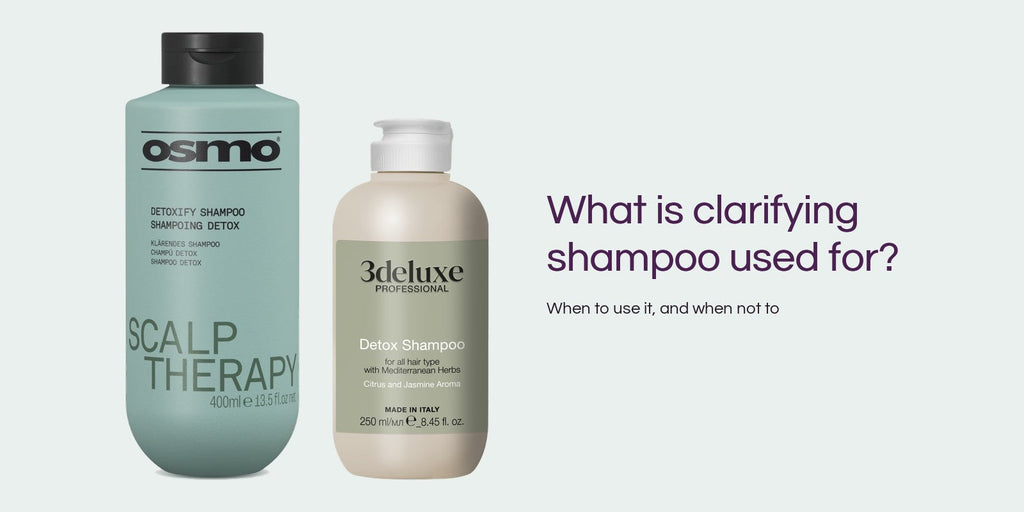
 Osmo Scalp Therapy Detoxify Shampoo 400mlA deep-cleansing shampoo with rosemary and tea tree, made to remove product build-up, dirt and excess oil, for use once a week.
 3deluxe Professional Detox Shampoo 250mlA detox shampoo from the 3deluxe Professional range, in a 250ml bottle.
 Fanola Nourishing Restructuring Mask 500mlA milk-protein mask for dry, coloured or chemically treated hair: leave it on towel-dried hair for 5 minutes after shampooing, then rinse.
Read next: How to bleach bath hair
Written by Amy-Louise Russell, Content Writer at Hairdressing Supplies.